








Plus size bras: start from the problem, not the style
Digging straps, gapping cups, and a rolling band each point to a different fix. Match the symptom, then measure your band and bust before you order.
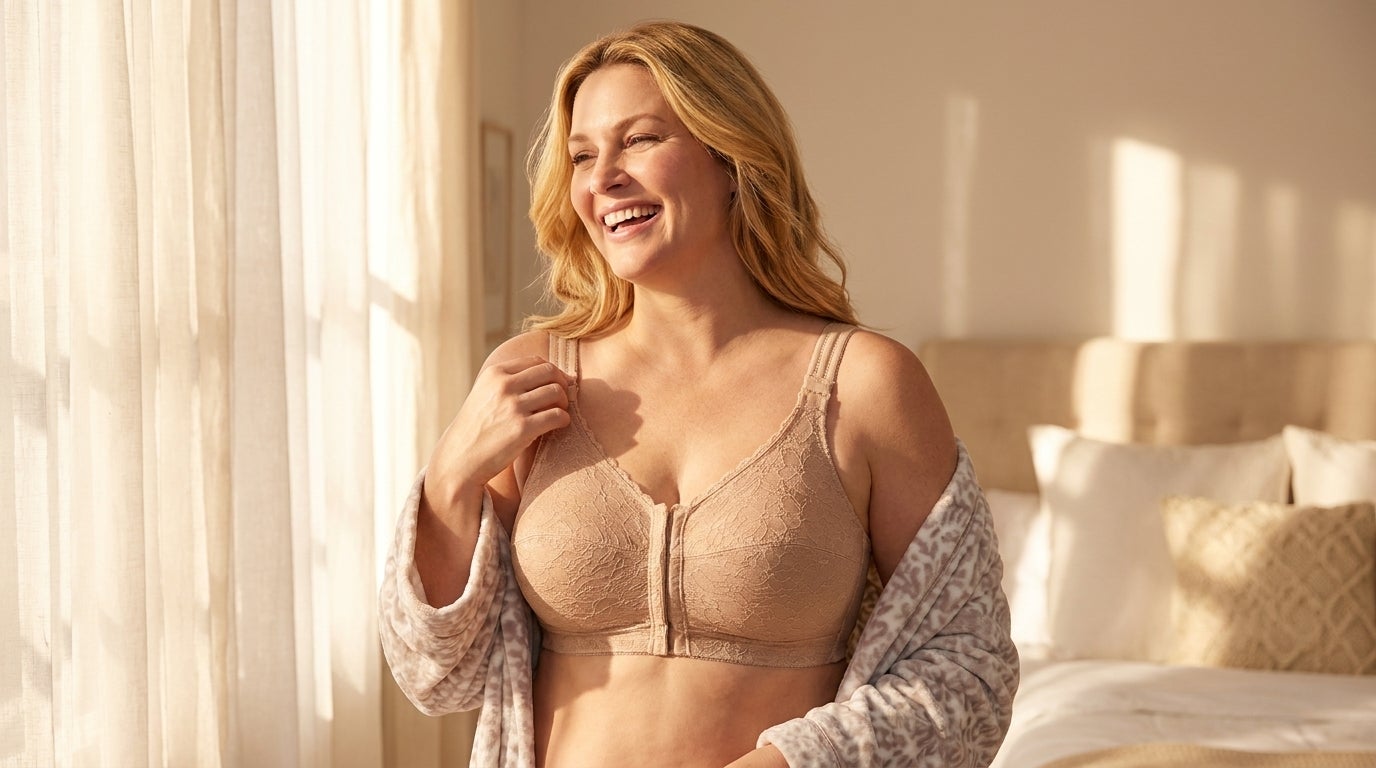
What to check before you buy a plus size bra
Four things decide whether a bra works: band size, cup size, wire or wireless, and closure style. Get the band right first, since it carries most of the support, then the cup, then pick the wire and closure that fit how you actually get dressed.
- Band size. The number in a size like 38DD. It should sit level around your ribcage on the loosest hook, snug but not digging in.
- Cup size. The letter after the band. It should fully contain your breast, with no gap at the top and no spillover at the sides.
- Wire or wireless. Wireless full-coverage cups support without an underwire. Try wireless bras first if underwire has ever hurt.
- Closure style. Front-close bras fasten one-handed at the center front. Back-close styles spread the hook row across more of your back.
Fabric matters too. Cotton breathes and washes easily; a nylon/spandex blend, like the one used in posture styles, holds its stretch and shape through more wears. Hand wash either fabric to keep the elastic in the band from breaking down early.
Match the symptom to the fix
Start from the problem, not the style. Digging straps usually mean the band is too loose; gapping or spilling is a cup issue; rolling at the bottom edge means the band is too tight. Measure your band and bust before you choose a bra style.
When straps dig in, the band is doing too little of the work, so the straps take over. A band that is too loose rides up in back and pushes support onto the shoulders instead of the ribcage. Try the next band size down on the same cup letter before you change anything else.
Wider comfort straps help too, since they spread the same load across more surface. Reviewers describe this combination as no digging, even on a full workday, once the band is doing its job.
A gap at the top of the cup means the cup is too big for you; spilling at the sides or under the arm means it is too small. This is a cup problem, not a band problem, so keep your band size and move a cup letter in either direction instead.
Seamed, double-lined cups hold their shape through the day better than a soft, unstructured cup, which matters most if gapping shows up again by afternoon.
Rolling means the band has stopped doing its job. If the bottom edge rolls up within a few wears, size down in the band, not the cup. A wider back panel resists this longer than a narrow one.
A power mesh crisscross back, the kind built into posture styles, adds extra structure across the back panel and holds a band shape longer through a full day of movement.

Four plus size bra styles, and who each is for
Once you know what is wrong, the style follows. These four styles cover the most common fit problems in Woman Within® bras, in band sizes 38–54 and cup sizes B–G.
The wireless posture bra adds a power mesh crisscross back and a smoothing back panel to a full-coverage wireless cup, with wider comfort straps and an easy front closure. It is built for a fuller bust that needs more structure across the back without a wire, and it is the pick if your band keeps rolling or your straps keep digging in.
This front-close wireless bra uses double-lined, seamed cups for light lift without an underwire, in breathable cotton. It is the everyday pick when your main complaint is underwire discomfort rather than band or strap trouble, and the front closure makes dressing quicker.
The back-close cotton bra spreads its hook row across the back instead of the front, which some find more secure through a full day of movement. It shares the same double-lined cup construction, cotton fabric, and adjustable straps as the front-close cotton styles.
The 3-pack wireless bras give you three full-coverage, front-close cotton bras with picot trim, once you have confirmed a size that works. It is a practical way to stock the size you already know fits instead of testing it three separate times.
| Style | Closure | Wire | Best for |
|---|---|---|---|
| Wireless posture bra | Front | Wireless | Rolling band, digging straps |
| Front-close wireless bra | Front | Wireless | Underwire discomfort, quick dressing |
| Back-close cotton bra | Back | Wireless | Full-day activity, secure fit |
| 3-pack front-close bra | Front | Wireless | Stocking a size you already know fits |
How to measure your band and bust
- Wear the bra or fabric you will actually wear it under, then wrap a soft tape around your ribcage, directly under your bust, level all the way around.
- Read that number in inches. Round to the nearest whole number for your band size.
- Wrap the tape around the fullest point of your bust, keeping it level and not pulled tight.
- Subtract your band measurement from your bust measurement. Each inch of difference is roughly one cup letter.
- Compare both numbers to the size chart for the specific style, since plus size bra categories tend to run small and a chart-accurate size can still need one size down in the band.
If you land between two band sizes, choose the smaller one and pair it with the larger cup letter. A snugger band that stretches slightly is easier to live with than a loose one that rolls by midday.
How to choose based on your fit problem
Digging straps and a rolling band point to the wireless posture bra. Underwire discomfort points to either front-close wireless option. A full day of movement points to the back-close cotton bra. Once you have a size and style that works, the 3-pack is the fastest way to build out your rotation.
Shop the full range in plus size bras once you know which problem you are solving, in band sizes 38–54 and cup sizes B–G.
Frequently asked questions
Are the cups true to size?
Cup sizing is consistent within a style, but it is not universal across brands or fabrics. If a style is new to you, order your measured size and expect a cup letter of adjustment either way on the first try.
What is the difference between front-close and back-close bras?
Front-close bras fasten at the center front, which is easier one-handed. Back-close bras spread the hook row across the back, which some find more secure during activity. Both come in the same band and cup ranges here.
Are front-closing bras padded?
The front-close styles above use double-lined, seamed cups for light shaping and lift instead of a separate foam pad. They are built for coverage and support, not add-on padding.
Is the cup material thick enough to prevent show-through?
Double-lined, seamed cotton cups are opaque enough for most everyday tops. For very fitted or light-colored fabrics, a full-coverage style with more structure, like the posture bra, gives the most reliable coverage.
How many rows of hooks does a plus size bra have?
It varies by style and band size, and generally increases as the band size goes up to keep the fit secure. Check the size chart for the specific style you are ordering rather than assuming one row count across the whole range.