








What is a full coverage bra?
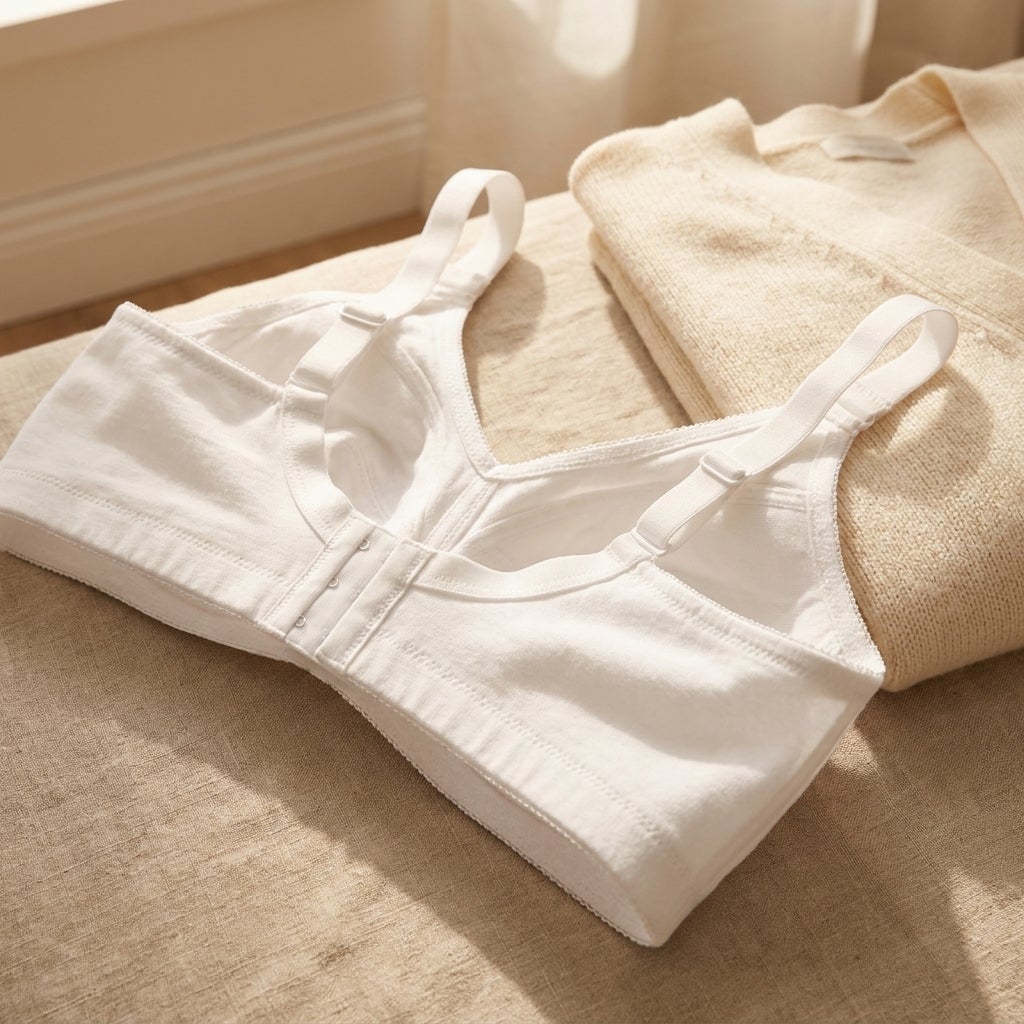
Full coverage describes the cup, not the size: it sits higher and further round than a demi cup, so more of your breast stays inside it.

What "full coverage" actually means
Full coverage describes the cup, not the size. A full-coverage cup comes higher at the top edge and further round at the sides than a demi or balconette cup, so more of the breast sits inside the cup rather than above or beside it.
It's a cup shape, not a size, so a full-coverage bra still has to be fitted band first. Once the band is right, the cup does the rest of the work.
In practice, full coverage usually arrives with three companions:
- Higher sides, so breast tissue doesn't spill out towards your underarms
- A wider back panel, which spreads the support across more fabric
- Wider, often adjustable straps, which share the weight instead of digging into your body
That combination is why full coverage is the default recommendation at fuller busts — not because of the size on the tag, but because more surface area means the bra is doing more of the holding.
Why the coverage matters more than the size
A cup that's too small for the coverage you need shows up as spillage at the top or sides, even when the band size is correct. A full-coverage cup solves that by shape, not by sizing up.
Woman Within reviewers describe this directly: a wide back that doesn't ride up, support that stays in place, and — for one 36H customer — finally finding a bra in her size at all. The complaints in this category run the other direction: cup gapping when the band is right, or a band that's too tight while the cup is oversized. Both point to the same fix — always measure your current band first, then choose the cup coverage that matches how your breast actually sits, not just a number.
Full coverage vs. demi and balconette cups
The real difference is how much of the breast the cup encloses and how high it sits at the top edge. A full-coverage cup covers nearly all of it; a demi or balconette cup is cut lower and shows more at the top and sides by design.
If you're choosing between the three, full coverage is the one built to hold everything in place under everyday clothes — a T-shirt, a button-down, a fitted sweater — rather than to shape a neckline for a specific outfit.
| Cup Style | Top Edge | Side Coverage |
|---|---|---|
| Full Coverage | Comes up close to your collarbone | Wraps further around towards your arms |
| Demi | Cuts lower across your chest | Leaves more of the outer breast uncovered |
| Balconette | Sits horizontally, low and straight | Minimal side coverage, built for a lifted, rounded look |
Full coverage bras from Woman Within
The full coverage bras assortment covers a range of closures and support levels, all built on the same higher-side, wider-back construction.
The Wireless Back-Close Cotton Bra is a straightforward everyday option: double-lined, seamed cups for shape without an underwire, breathable cotton fabric, and a back closure. It's built in band sizes 38 to 54 with cup sizes B up to G.
Prefer a front closure? The Comfort Choice Front-Close Wireless Bra pairs the same double-lined, seamed full-coverage cup with a secure front hook and adjustable straps, and the 3-Pack Front-Close Cotton Wireless Bra gives you three full-coverage, soft-cotton bras for daily rotation at once.
If shoulder pressure is the problem you're solving, the Playtex 18 Hour Ultimate Shoulder Comfort Wireless Support Bra adds wider, cushioned straps and a smoothing back to the same higher-sides, fuller-cup formula, wireless throughout.
All of it is backed by Woman Within's Fit-Love Guarantee with free exchanges, and the range runs to bras to 54/O for customers who've had trouble finding coverage anywhere else.
Frequently asked questions
Are the cups true to size?
Cup sizing varies by style, not just by brand, and reviewers in this category report the band size fitting consistently across bras when they measured their band and cup sizes. Check each product's stated band and cup range and fit your band first — and your cup is easy to adjust afterwards.
Is the cup material thick enough for everyday wear under a T-shirt?
Yes. Full-coverage cups in this range use double-lined construction for modesty with seamed shaping, built for structure and everyday support rather than a sheer or unlined feel. Check the individual product's fabric and lining details before you buy.
How many rows of hooks does a full-coverage back-closure bra have?
Hook rows vary by style and are listed in each product's fit details, since a wider back panel on a full-coverage bra sometimes carries more rows than a narrower one. Check the specific bra's product page details for its exact closure.
What does the band size measure?
The band size measures around your ribcage, directly under the bust, snug but not tight. It's the number that should carry most of the support — the cup size is fitted second, based on how much coverage you need.