








How to tell if a plus-size top is see-through
You can't always decipher if a plus-size top is see-through just from a photos. Always check the fabric, knit and color in the description, and keep a nude-toned bra or light layer as backup.
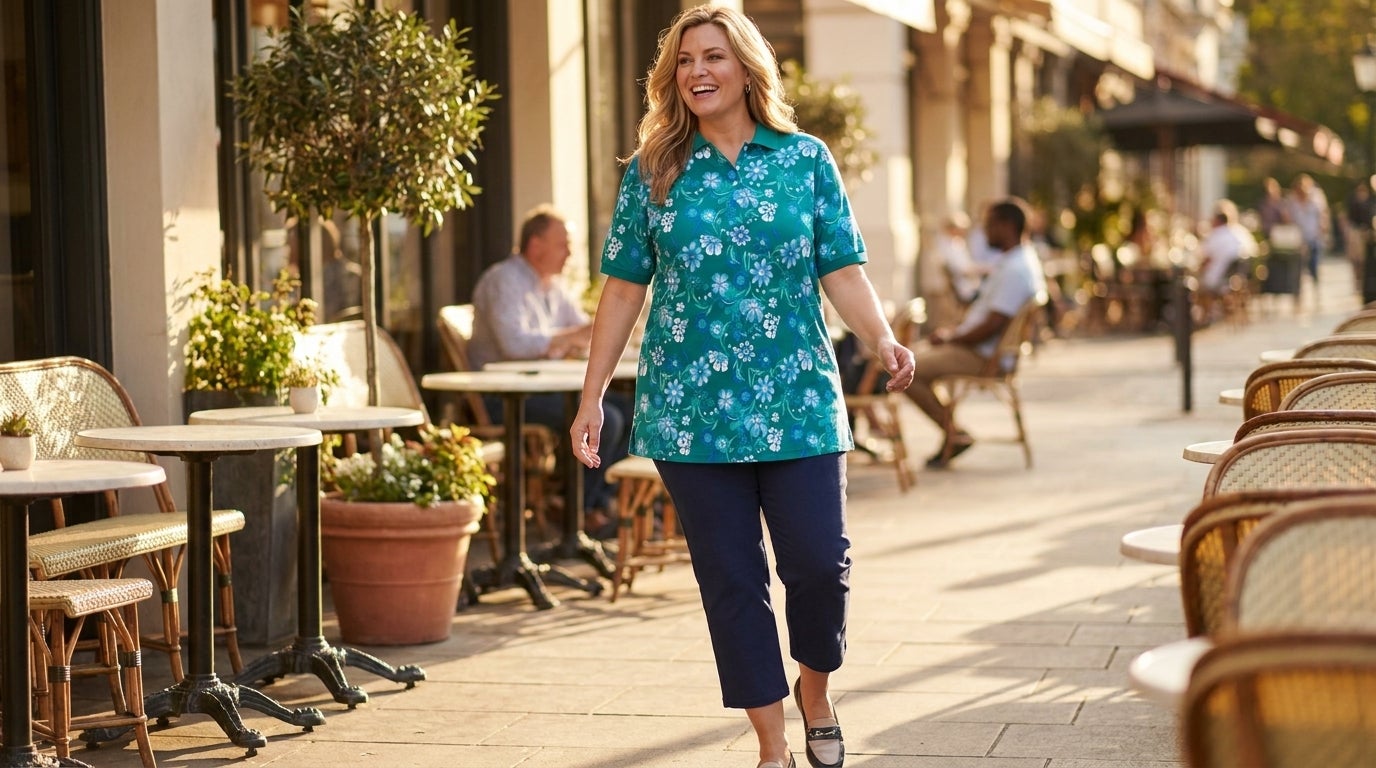
A photo can't tell you if a top is opaque. The knit structure and the color are the signals you actually have — a tightly knitted, heavier fabric in a dark or printed color rarely shows through; a light single knit in white almost always does. Product photos are lit and shot to flatter the garment, not to test it, so the fabric details in the written description carry more real information than the image ever will.
Why the fabric matters more than the fiber
Fiber content alone won't tell you if a top is see-through. Very few of our Woman Within tops are sheer. Our 100% cotton tees and top are knitted close together and, our cotton/poly interlock knits are even thicker and more opaque. The Elbow-Sleeve Polo Tunic uses exactly that construction: its own product description calls the fabric naturally opaque, because two knitted layers block light the way one layer can't.
The rest of our Perfect Tee lineup — the Perfect Short-Sleeve Crewneck Cotton Tee, the Perfect Short-Sleeve V-Neck Tee, and the Notch-Neck Pocket Tee — use a durable cotton (or cotton/poly heathered blend) built to hold up wash after wash, and stay opaque.
Four steps to check opacity before you order
Read the product description the way you'd read a fabric label. Four checks tell you more than any photo can.
- Look for the knit type. Words like interlock or double-knit mean two layers knitted together, which is more opaque than a single jersey knit.
- Check the color. White, cream, and pale pastels show through the most; navy, black, and prints hide the most.
- Look for an explicit opacity claim. Few descriptions state one, but when a fabric is called naturally opaque, as our Elbow-Sleeve Polo Tunic's is, take it at its word.
- If none of that is stated, ask before you order. A quick question on the product page usually gets you a straight answer from someone who's handled the fabric.
How common knit types compare for opacity
| Knit type | What it means for opacity |
|---|---|
| Interlock / double-knit | Two layers knitted together. Thicker and more opaque than single jersey, with a smooth, matching finish on both sides. |
| Single jersey | One layer only. Lighter and more breathable — and more likely to show what's underneath, especially in white. |
| Ribbed knit | A textured, stretchy weave. Opacity depends more on weight and color than on the rib itself. |
The mistake most shoppers make
Assuming fiber content decides opacity is the most common mistake. "100% cotton" describes the fiber, not how tightly it's knitted — the same fiber can be a heavy interlock or a sheer single jersey. Judge the knit structure and the color first, and treat fiber content as a secondary detail, not a guarantee.
Heathered and printed fabrics add a second wrinkle. A heather blend, usually cotton and poly spun together, breaks up the surface with flecks of color, which visually hides more show-through than a flat, solid color of the same weight. A print does the same job for a different reason: the pattern itself distracts the eye from any thinness underneath. Neither changes the actual knit density, but both make the same fabric read as less see-through in practice.
How to double-check before it ships
When the description doesn't settle it, plan for it instead of guessing. A nude-toned, seamless bra shows the least under lightweight knits, and a soft layering cami or tank under a scoopneck or V-neck — like our Perfect Scoopneck Tank Top — adds full coverage without changing how the top looks. Both work whether or not a top turns out to run thin.
Our t-shirts and tunics span both single-jersey and interlock knits, sized 10W–44W, so the same opacity check applies no matter which style or size you're ordering.
Frequently asked questions
Does 100% cotton mean a top won't be see-through?
No. Cotton content describes the fiber, not the knit. A tightly knitted interlock in 100% cotton is far more opaque than a loosely knitted single-jersey cotton tee, even at the same fiber percentage.
What can I wear under a sheer top?
A nude-toned, seamless bra shows the least under light knits. A soft layering cami or tank under a scoopneck or V-neck adds coverage without changing the outfit.
Does a heavier knit always mean less see-through?
Usually. An interlock or double-knit fabric is knitted in two layers, so it's thicker and more opaque than a single-layer jersey knit of the same fiber.
Why does white show more than other colors?
White and pale pastels have less pigment to block light, so any thinness in the knit shows through more. Navy, black, and printed fabrics hide it best.