








How to keep black clothes from fading
Wash darks inside out in cold water on a short cycle, skip bleach and brighteners, and dry on low. New dark denim needs a wash on its own first.

The wash routine that keeps dark colors dark
Fading is mostly mechanical and chemical, not a sign a garment was cheap: dye lifts when hot water, long cycles, heat, and abrasion work on it together. Five habits control most of it.
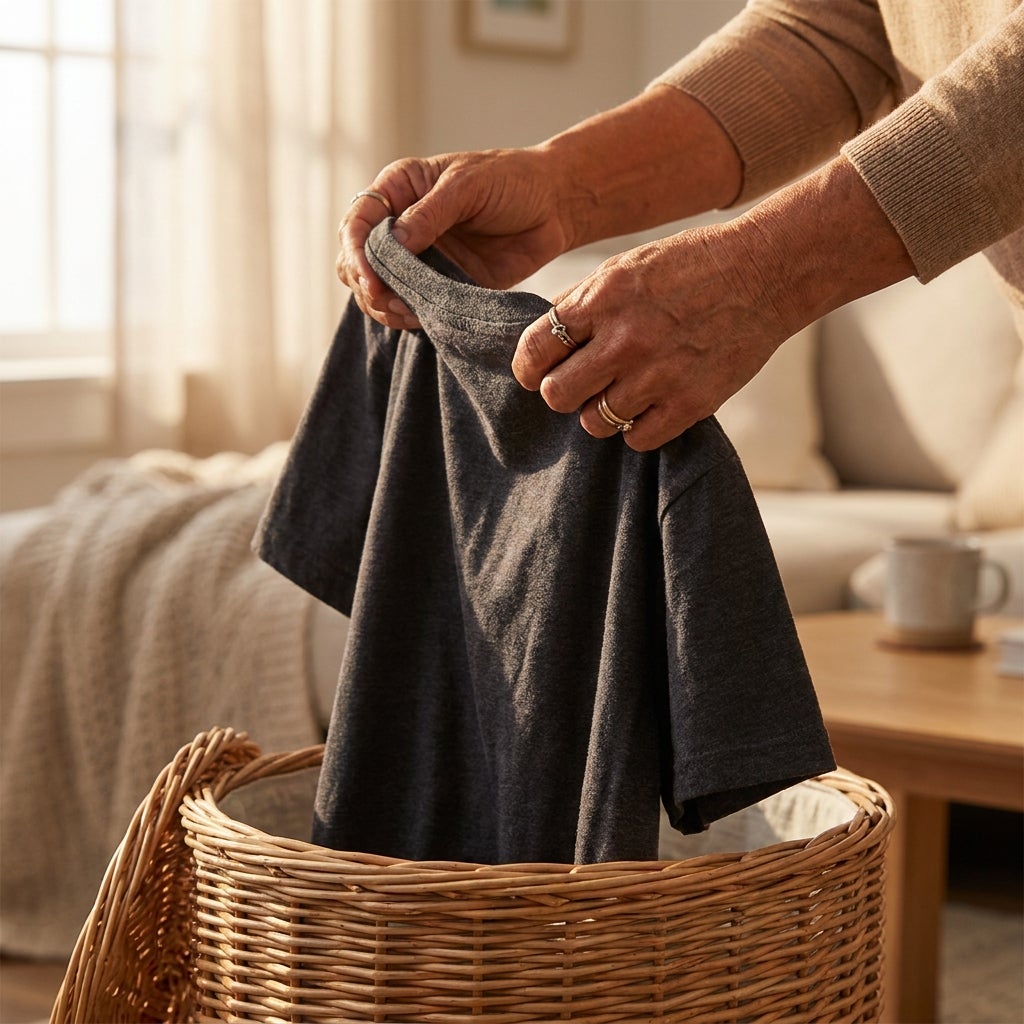
- Turn each garment inside out before it goes in the machine, so friction from other clothes wears on the inside, not the visible face.
- Always wash darks in cold water on a short or delicate cycle. Heat and agitation are the two biggest causes of dye loss.
- Wash dark loads separately from lights, and separately by weight when you can — heavy denim against a light knit top abrades the knit.
- Skip chlorine bleach and skip detergent with optical brighteners; both are built to alter color, and darks are no exception.
- Dry on low heat or better yet, hang to dry out of direct sun. High heat in the dryer does nearly as much damage as hot water in the wash.
New dark denim and other deeply dyed pieces release the most color in their first few washes. Wash a new pair, like the 7-Day Straight-Leg Elastic-Waist Cotton Denim Pant, on its own for the first two or three washes before it joins the rest of your dark load. This routine matters most for the pieces you wear hardest — start with your black and navy T-shirts.
What ruins dark colors fastest
A handful of habits shorten the life of a dark garment faster than normal wear does.
- Washing in hot or warm water, which opens the fabric and lifts dye with it.
- Overloading the machine, which increases friction between garments.
- Using bleach, stain sticks with bleach alternatives, or detergent pods marketed for whites.
- Line-drying in direct, strong sun, which fades color the same way it fades outdoor fabric.
- Ignoring the care label — a garment marked machine wash cold is telling you the safest setting, not a suggestion.
On our Woman Within knit and woven pieces, follow the fabric and care instructions on the garment tags closely. The Perfect Long Sleeve Shirt is a woven cotton/poly blend that's machine washable, and the Button-Front Elbow-Sleeve Knit Dress is a stretchy cotton/poly knit, machine washable and tumble dry.
How to fix a garment that's already faded or bled color
Once color has bled onto skin or fabric, cold water and a fast rinse are your best next step — the sooner, the better.
If a dark garment bleeds onto lighter fabric in the wash, rewash the stained piece alone in cold water before it goes in the dryer; heat will set a dye stain permanently. If the garment itself looks patchy or dull rather than transferring color onto something else, that fading is usually done — there's no reliable at-home fix that restores the original depth of color, and we won't tell you there is. Move that piece into its own gentle, cold-water routine going forward to slow any further loss.
A tee like the Perfect Short-Sleeve V-Neck Tee is 100% cotton, so it responds well to a slower, cooler wash the moment you notice it starting to dull.
Frequently asked questions
Should you wash black clothes in cold water?
Yes. Cold water is the single biggest factor in keeping dark dye in the fabric instead of in the wash water.
Does turning clothes inside out stop fading?
Yes, it reduces fading. Turning a garment inside out puts the abrasion from other clothes on the inside face, so the visible side keeps more of its color.
Do dark colors bleed onto other clothes?
They can, especially in the first few washes. Wash new dark denim and other deeply dyed pieces separately until the rinse water runs clear. Also try: Stir in 1/2 a cup of white vinegar or kosher salt into the bath. Both act as natural mordants that help lock the raw indigo dye into the cotton fibers.
What temperature should you wash tees in?
Cold, on a short or delicate cycle. It's gentler on both the dye and the fabric than warm or hot water.