








How to choose plus size sandals for wide feet
Width and shoe size are separate decisions. Check the shoe width choices and strap style before you order plus size sandals for wide feet.

What actually makes a sandal fit a wide foot
A sandal fits a wide foot when three things line up: the shoe width, an adjustable strap that opens up rather than only stretches, and a wide toe box with room across the front of the foot. Get one of those wrong and the sandal pinches, no matter what size you ordered.
Shoe size tells you the length of your foot. It says nothing about how far around it is. Treat width and size as two separate decisions, and check both against the size chart before you buy — measure before you buy is the single most reliable way to avoid a return.
Check the shoe width before you order your shoe size
Woman Within® sandals come in W (wide) and WW (extra-wide), and they are not interchangeable. W adds room over a standard width; WW adds even more width again. Ordering one when you needed the other is the most common fit complaint we see.
- W (wide): more room than a standard width — a reasonable starting point if you have not needed a wide shoe before.
- WW (extra-wide): meaningfully more room across the ball and top of the foot than W.
- If a wide shoe still feels tight, or a fitting professional has told you your feet are wide, try WW before assuming the style itself will not work.
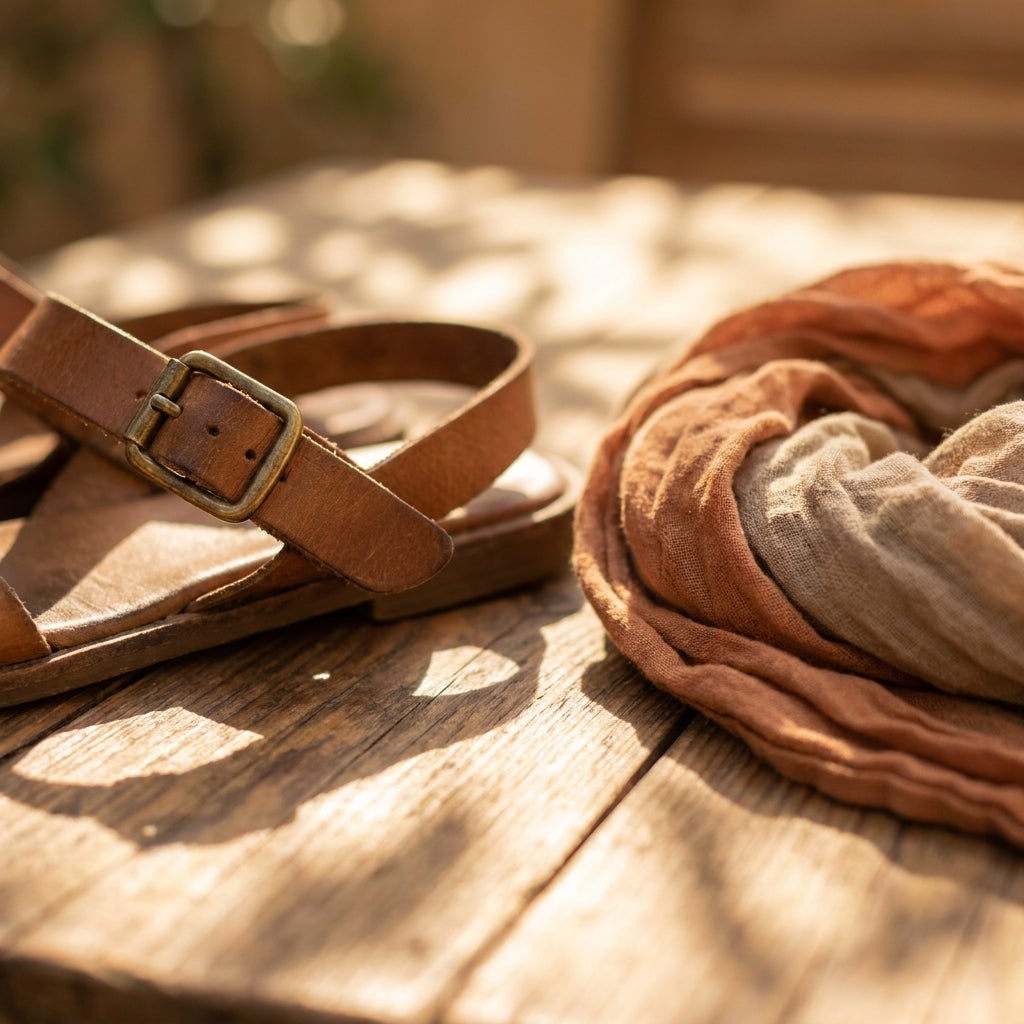
Choose a strap that opens up, not just one that stretches
A fixed strap only ever fits one width. An adjustable one — a buckle, a hook-and-loop closure, or a length of elastic goring — can open further across the widest part of your foot, which is usually where a sandal pinches first.
- Buckle straps adjust in fixed increments, so you can loosen a notch if your foot swells later in the day.
- Hook-and-loop closures adjust in small, continuous steps, useful when your width falls between two buckle holes.
- Elastic goring stretches with movement and gives room without you having to readjust it.
Give your toes room: why toe shape matters
A pointed toe box tapers your toes together no matter how wide the rest of the sandal runs. A rounded or square toe box leaves them their natural width, which matters more on a wide foot than the overall width code.
Toe room is easy to miss when you are only checking the width code, because a sandal can be labeled WW and still narrow sharply at the front. Check the toe shape as its own criterion, separate from the width.
Match the construction to your foot
Once you know your shoe width, strap preference, and desired toe shape, the decision comes down to matching a sandal’s construction to what your foot actually needs.
Start with our wide width casual sandals, or check slides and mules and wide width flats if an open toe strap is not the right call for your foot.
| What Your Foot Does | Look For |
|---|---|
| Swells over the course of a day | A buckle or hook-and-loop strap you can loosen without switching sandals |
| Is wide across the ball but not the heel | An adjustable strap positioned over the widest part of the foot, not just at the ankle |
| Has wide toes or a bunion | A rounded or square toe box, not a pointed one |
| Has run narrow in W before | WW (extra wide) the extra-wide option, rather than a half size up in W (wide) |
Frequently asked questions
Does WW mean wide or extra-wide?
WW means extra-wide. W is one step up from a standard width; WW adds more room again, mainly across the ball and top of the foot. They are not the same width, so check which one your foot needs before you order.
Should I size up if my foot is wide?
Not by default. Sizing up changes length, not width, so a longer sandal can still pinch across a wide foot while leaving extra room at the toe. Try the correct shoe width first, in your regular length.
Do wide-width sandals fit the same across every style?
No. Width construction varies from style to style, so an extra-wide WW shoe that fits well in one sandal can still run narrow in another. Check the shoe width and strap type on each style you order.
Do I need to measure my foot if I already know my shoe size?
Yes. Shoe size measures length, not width. Measure across the widest part of your foot, usually the ball, and compare that number to the Size Chart every time you order a new shoe.