








Plus-size winter boots for a wide calf: what to check
Winter boots for a wide calf come down to four choices: shaft height, closure, lining and sole, and foot width measured apart from calf width.

What decides whether a winter boot fits your wide calf
Match four things: shaft height, which decides where the boot sits on your calf; the closure, since a full-length zip, gusset or elastic panel adds width a pull-on shaft cannot; the lining and sole for real winter wear; and the foot width, which is measured separately from the calf.
Woman Within carries wide-calf boots across several shaft heights and closures, so once you know your calf circumference measurement, the rest is a construction decision, not a guessing game. If you haven't measured your calf yet, do that first — our calf-measuring guide walks through it — then come back to this page with the number.
Shaft height decides where the boot meets your leg
An ankle boot stops below the widest part of most calves, so it sidesteps the fit problem entirely. A mid-calf boot lands closer to that widest point, which is exactly where a snug shaft becomes noticeable. A tall boot has to clear the calf and keep going, so its closure matters even more.
If your calf is the main obstacle and you'd rather not fight it, ankle boots are worth checking before you commit to a taller shaft.
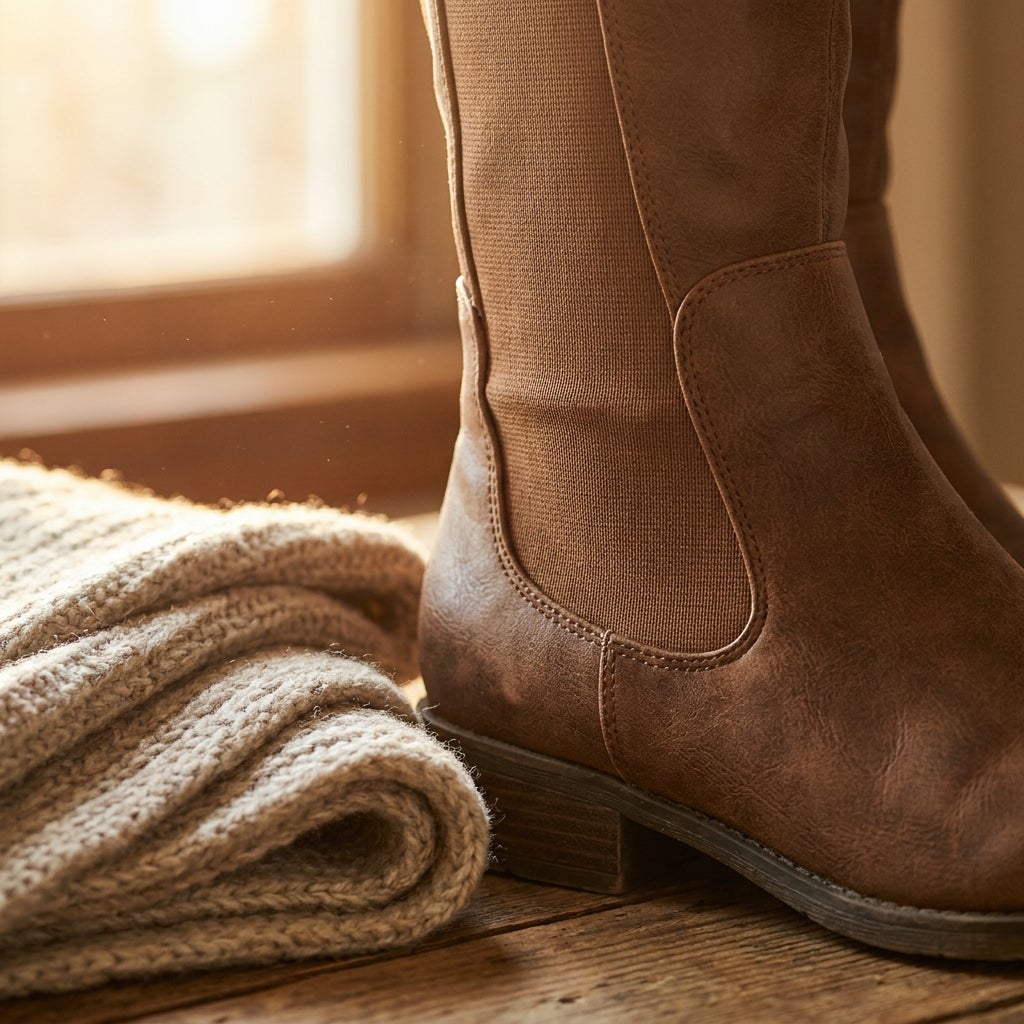
The closure is what actually adds room
Shaft height tells you where the boot meets your calf; the closure tells you whether it can open enough to get there. A full-length side zip lets the shaft expand and contract with your leg. A gusset — a stretch or fabric panel set into the shaft — adds give without a visible seam. Laces let you fine-tune the fit point by point. An elastic panel does the same job with no adjustment needed. A pull-on shaft with none of these has no give at all, so what you see in the size chart is what you get.
Lining and sole tell you if it's really a winter boot
Plenty of boots are shaped for cold weather without actually being built for it. A genuine winter boot states its lining and outsole details on its own product page — read that section before you buy, rather than assuming a dark color or a chunky sole means cold-weather performance. If a listing doesn't say what the lining is, treat that as useful information too.
Foot width and calf width are measured separately
These are two different numbers, and a boot can be right on one and wrong on the other. Shoppers who need more room at the calf don't automatically need a wider foot, and the reverse is just as common — check both specs on the product page rather than assuming a "wide calf" label covers the foot too.
Calf circumference can also vary between styles from the same collection, so a size that worked in one boot isn't guaranteed in the next. Re-check the stated calf measurement every time, even for a style you've bought before. If you're layering thicker socks for warmth, factor that into the fit as well — our hosiery and socks can add welcome warmth, but bulkier layers take up some of that calf room.
Which construction to choose
- Calf is your main issue, shaft height doesn't matter to you: look for a full-length zip or gusset in a mid-calf or tall shaft.
- Calf is your main issue, you'd rather avoid the shaft altogether: an ankle boot removes the problem instead of solving it.
- Foot and calf both need room: check both measurements on the product page — they aren't linked.
- You need real cold-weather performance: read the lining and sole details before you read anything else.
Start with your calf measurement, then filter by shaft height and closure. That order — not style first — is what actually gets you a boot that closes.
Frequently asked questions
What counts as an extra wide calf boot?
It's the roomiest calf-circumference category a brand offers — cut wider through the shaft than a standard wide-calf style. The exact circumference varies style to style, so check the number on each product page rather than assuming.
How high should a winter boot come up my leg?
That's a shaft-height choice, not a rule. An ankle boot stops below the calf entirely; a mid-calf or tall boot needs to actually accommodate the widest part of your leg where it lands.
Are wide-calf boots true to size in the foot?
Usually the foot sizing matches the brand's standard boots — the extra room is built into the shaft, not the toe box. If you also need a wider foot, look for that as a separate option; wide calf doesn't automatically mean wide foot.
Do ankle boots work if my calves are wide?
Often, yes. Because the shaft stops below the widest part of your calf, an ankle boot sidesteps the fit problem entirely. Just confirm the ankle opening itself is comfortable.