








How to measure your calf for wide-calf boots
Measure your calf at its widest point, standing, over the socks you'll wear. Compare that number to the boot's stated calf circumference on the Size Chart.

Measure your calf at its widest point, standing, over the socks you'll wear, and leave a little room to move. Compare that number to the boot's stated calf circumference — wide-calf shafts are cut wider than a standard boot, but by different amounts from style to style, so the measurement matters more than the label.
How do you measure your calf for boots?
Stand the way you normally stand when you wear boots, not sitting with your leg relaxed. Sitting can shrink the number.
- Put on the socks or tights you'd actually wear with the boots.
- Find the widest part of your calf, usually a few inches below your knee.
- Wrap a soft measuring tape around that point, keeping it level all the way around.
- Pull the tape snug against your leg, but don't let it dig in or compress your skin.
- Write down the number in inches. That's your calf circumference.
How do you read a boot's calf measurement?
Boot shopping involves three separate measurements, not one, so don't let your usual shoe size stand in for all of them.
- Shoe size covers the length of your foot.
- Width code, like W or WW, covers the width of your foot.
- Calf circumference covers the shaft, and it's listed separately on the product page.
Compare your calf number to that stated circumference, not to the word "wide" on its own — a wide-calf boot is built with a roomier shaft than a standard boot, and the exact amount of extra room varies by style. Shaft height matters too: a knee-high boot crosses a wider part of your leg than an ankle boot does, so the same calf measurement can fit differently depending on how tall the shaft is.
What if you're between calf measurements?
Size up to the larger calf option rather than down. A shaft that's slightly roomy is comfortable; a shaft that's snug at the widest point of your calf will only get tighter when you sit, walk, or wear thicker socks in colder weather.
Leave a little breathing room in your measurement rather than shopping to the exact number. Your calf isn't a fixed size — it changes slightly through the day, and a shaft with zero spare room won't account for that.
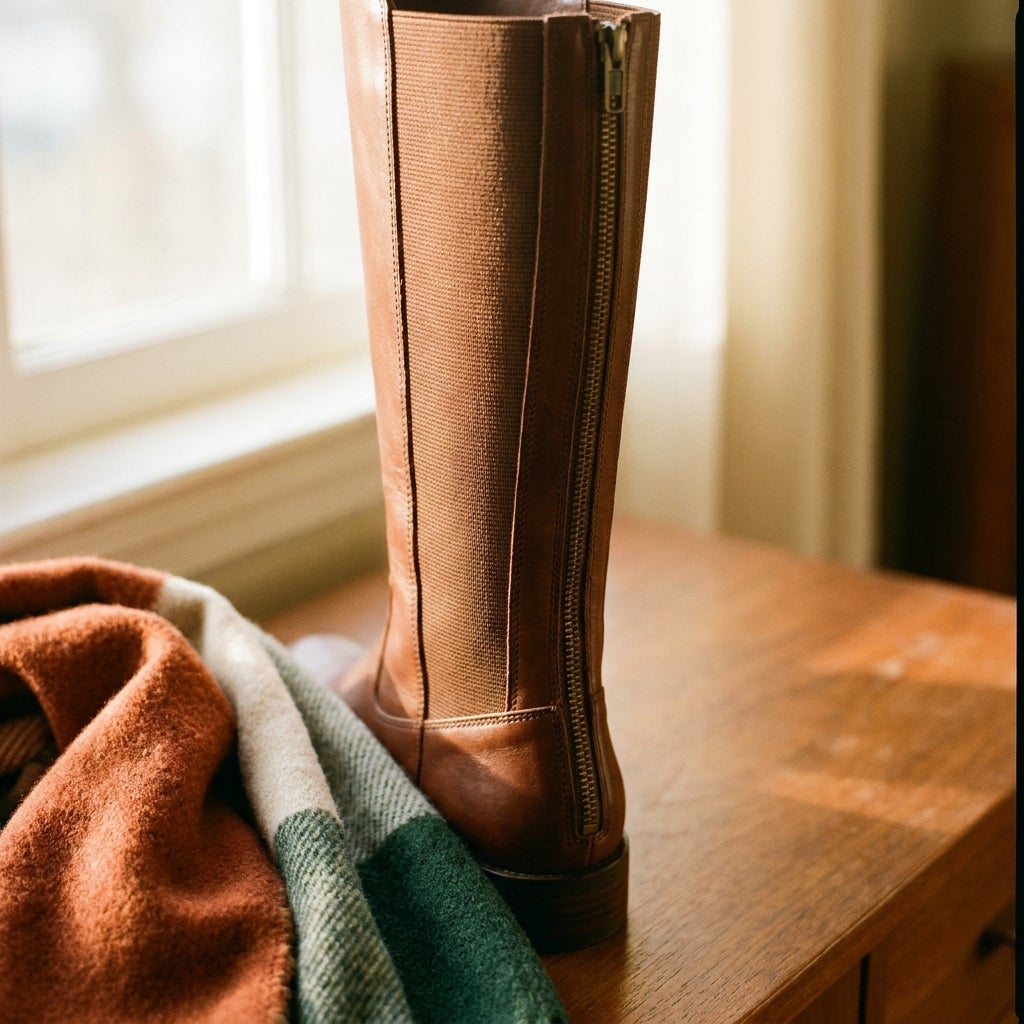
How do wide-calf boots create extra room?
The extra room comes from how the shaft itself is built, not from a looser fit overall. Look for a few specific features when you're comparing styles.
- A wider shaft pattern cut specifically for a larger calf, rather than a standard shaft graded up.
- Stretch panels or gore inserts set into the shaft that flex with your leg as you move.
- A back zipper that opens the shaft fully for getting the boot on and off, then closes to hold its shape.
These are the details worth checking on any product page before you buy — a stated calf circumference plus a stretch panel or back zip tells you more about real-world fit than "wide calf" alone. Our wide width shoes and boots are built around exactly this kind of separate, stated fit information, so you're comparing real numbers instead of guessing.
Frequently asked questions
Should I measure my calf over jeans?
Measure over the socks or tights you'll actually wear with the boots, but not over jeans. Denim adds bulk that isn't part of your real calf measurement and can throw off the number you compare to the boot's stated circumference.
What's the difference between wide calf and extra wide calf?
Both terms describe a shaft built wider than a standard boot, but the exact circumference range differs by style and brand. Always check the specific calf measurement listed on the product page rather than relying on the label alone.
Do wide-calf boots come in wide widths too?
Yes! Calf circumference and foot width are separate measurements, so be sure to check both. A boot can offer a wider shaft without automatically including a wider width code, and the reverse is also true.
How high should the boot shaft be?
That depends on where you want the boot to sit on your leg and how much of your calf you want it to cross. Taller shafts cross more of your calf, so shaft height and calf circumference work together, not separately.