








How to find your plus size bra size at home
A snug band measurement plus a loose bust measurement gives you your size — no calculator needed, just a soft tape and two minutes.
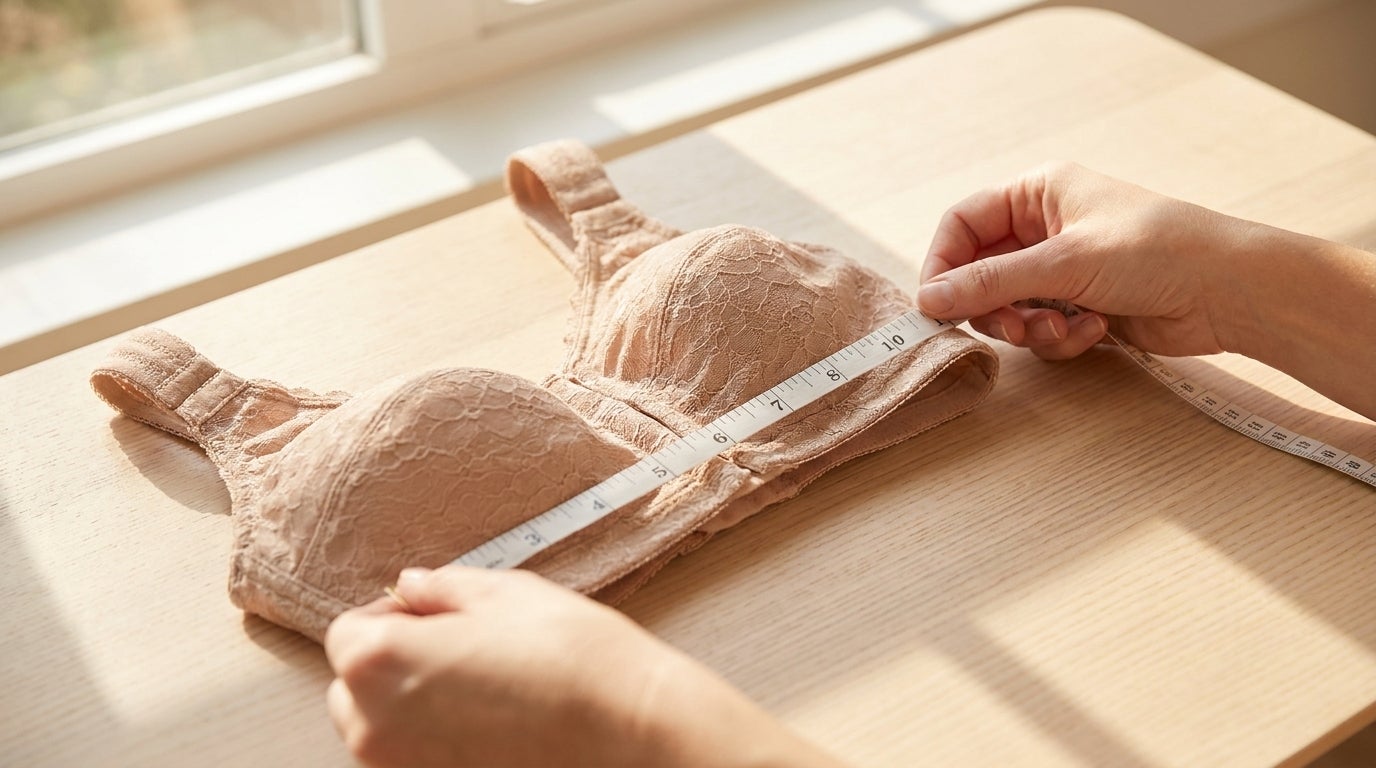
How to measure your bra size at home
To measure your bra size at home, take a snug band measurement directly under your bust and a loose overbust measurement at the fullest point. The under-bust number gives your band; the difference between the two gives your cup. You need two numbers, a soft tape, and a bra you already own — no calculator required.
What you need before you start
Grab a soft measuring tape and a bra with no padding — the numbers only work if the tape reads your actual shape.
- A soft, flexible tape measure, not a rigid ruler or metal tape.
- A bra with no padding, underwire, or push-up lining.
- Two minutes, standing somewhere you can read the tape easily.
Measure your band size
Wrap the tape directly under your bust, snug and level. That number is your band size.
- Take off any padded or push-up bra and put on one with no padding, or measure over bare skin.
- Run the tape around your ribcage directly under your bust, keeping it level front and back.
- Pull it snug — close enough that you can't fit more than one finger underneath.
- Breathe out and read the number in inches, rounded to the nearest whole number.
Bra categories skew toward reviewers who describe fit as running small, so if your reading falls between two band sizes, the snugger size is usually the working starting point.
Measure your cup size
Run the tape loosely across the fullest part of your bust. The difference between this number and your band number gives your cup letter.
- Keep wearing the same non-padded bra you used for the band measurement.
- Wrap the tape around the fullest part of your bust, level at the back.
- Let the tape rest without pulling it tight — it should lie flat, not compress.
- Read the number in inches and subtract your band measurement from it.
Each inch of difference moves you up one cup letter: one inch is an A, two inches a B, three a C, and so on up the alphabet.
Turn your two numbers into a bra size
Combine your band number with the cup difference, then compare the result against the size chart for the specific style you're buying — band and cup ranges are set per style, not site-wide.
The Front-Close Wireless Posture Bra states band sizes 38 through 54 and cup sizes B through G in its own size chart, and the Playtex 18 Hour Ultimate Shoulder Comfort Wireless Support Bra spans band 36 through 54 and cup B through H — always check the style's own chart rather than assuming one range fits every bra in the bras collection.
| Difference (Bust minus Band) | Cup Letter |
|---|---|
| 1 inch | A |
| 2 inches | B |
| 3 inches | C |
| 4 inches | D |
| 5 inches | DD/E |
| 6 inches | F |
| 7 inches | G |
If you land between band sizes
Bra categories skew toward "runs small" in customer reviews, so between two band sizes, size up the band before you size up the cup.
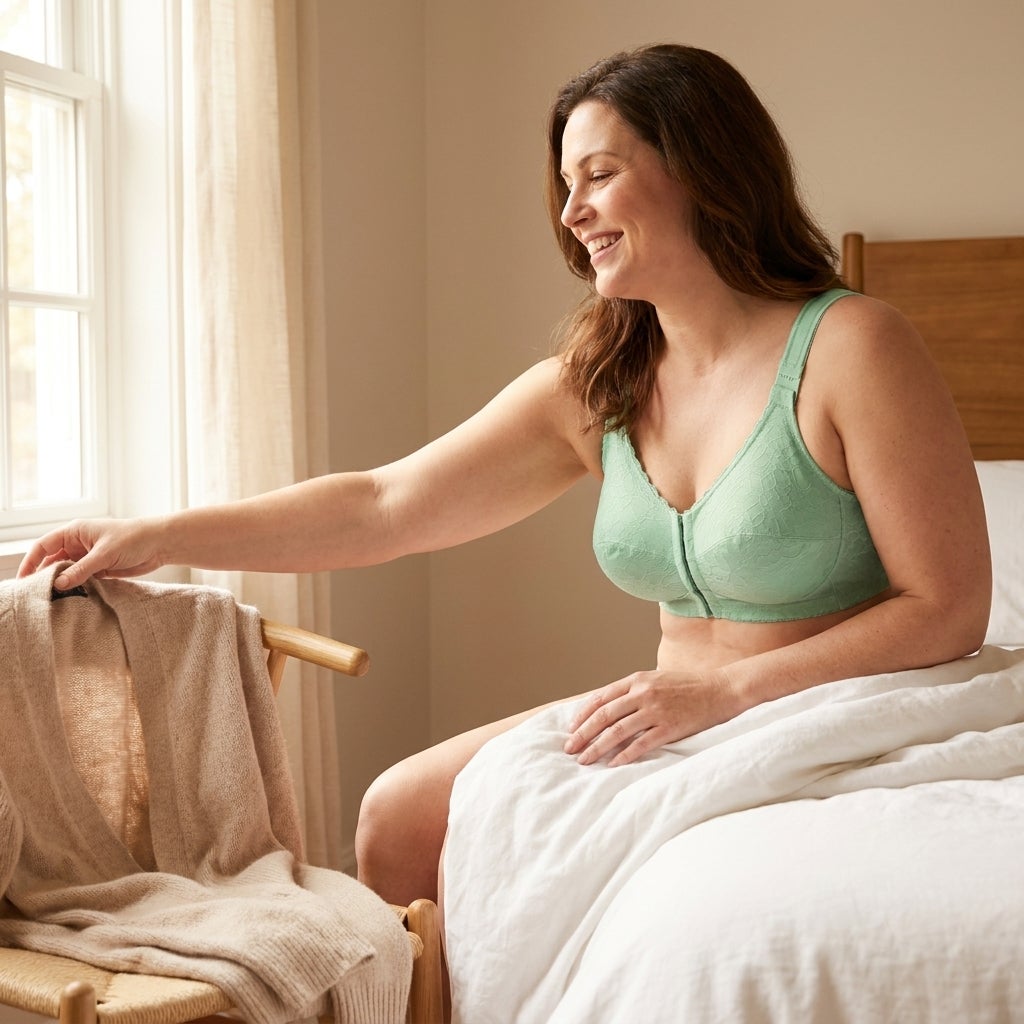
Look for styles with real adjustability. The Wireless Back-Close Cotton Bra has adjustable straps and double-lined bottom cups that hold their shape as the band settles, and the Comfort Choice Front-Close Wireless Bra gives you a secure back closure with straps you adjust yourself, so a size that's close gets closer with wear.
If the band still rolls or rides up after adjusting, you likely need a firmer band, not a bigger cup — the checks below tell you which one it is.
Common measuring mistakes that throw off your size
- Measuring over a padded or push-up bra, which adds inches to both numbers.
- Pulling the band tape as tight as the bust tape — the band should be snug, the bust measurement should stay loose.
- Letting the tape ride up in the back, which reads several inches smaller than your real band.
- Rounding your bust number down instead of to the nearest whole inch, which can drop you a full cup letter.
- Assuming one band-cup range applies to every bra — ranges are set per style, so recheck the chart each time you shop a different one.
One reviewer measured carefully and still found a bra that, in her words, "no where comes near fitting, neither around nor in cup size." A mismatch like that usually traces back to one of the mistakes above — most often a loose band reading or a bra measured over padding.
How to check that your new size fits
Put on a bra in your new size and run through four checks before you decide it's right.
- The band sits level all the way around and doesn't ride up in the back.
- You can fit one or two fingers under the band, snug but not tight.
- The cups lie flat against your skin with no gaping or spilling at the edges.
- The straps stay in place on their own, with no digging in at the shoulders.
A bra that fits stays in place through a full day: no digging straps, no band that rolls, no cups you have to shift. Woman Within carries bras to 54/O, and every style is designed and tested on real plus-size women, so the size you land on today should carry over the next time you shop wireless bras or a different silhouette. If a specific style still isn't right, the Fit-Love Guarantee covers a free exchange.
Frequently asked questions
Should I measure with a bra on?
Yes — wear a soft, non-padded bra so the tape reads your actual shape, not added padding. A padded or push-up bra can add an inch or more to both numbers.
Is a 34-inch band measurement the same as a 34-inch tape reading?
Not always. Bra bands are sized in even numbers, so your tape reading rounds to the nearest even band size — a 33-inch reading typically becomes a 34 band.
How many rows of hooks does a plus size bra have?
It varies by style. Hook rows increase as the band and cup sizes increase. It truly is different for every bra style and is not standard.
Do bra cups prevent show-through?
Lining varies by style. If show-through matters to you, check the fabric and lining details on the product page before you buy.
Which bra style offers the most support?
It depends on your shape and preference. Full-coverage and wireless styles with wider bands and straps, like a posture bra, give support without underwire — try a few silhouettes to find what stays in place for you.