








Bra band vs. cup fit: how to tell what's wrong
Band problems are felt: riding up, rolling, digging. Cup problems are seen: gaping, wrinkling, spillover. Fix the right fit issue first.
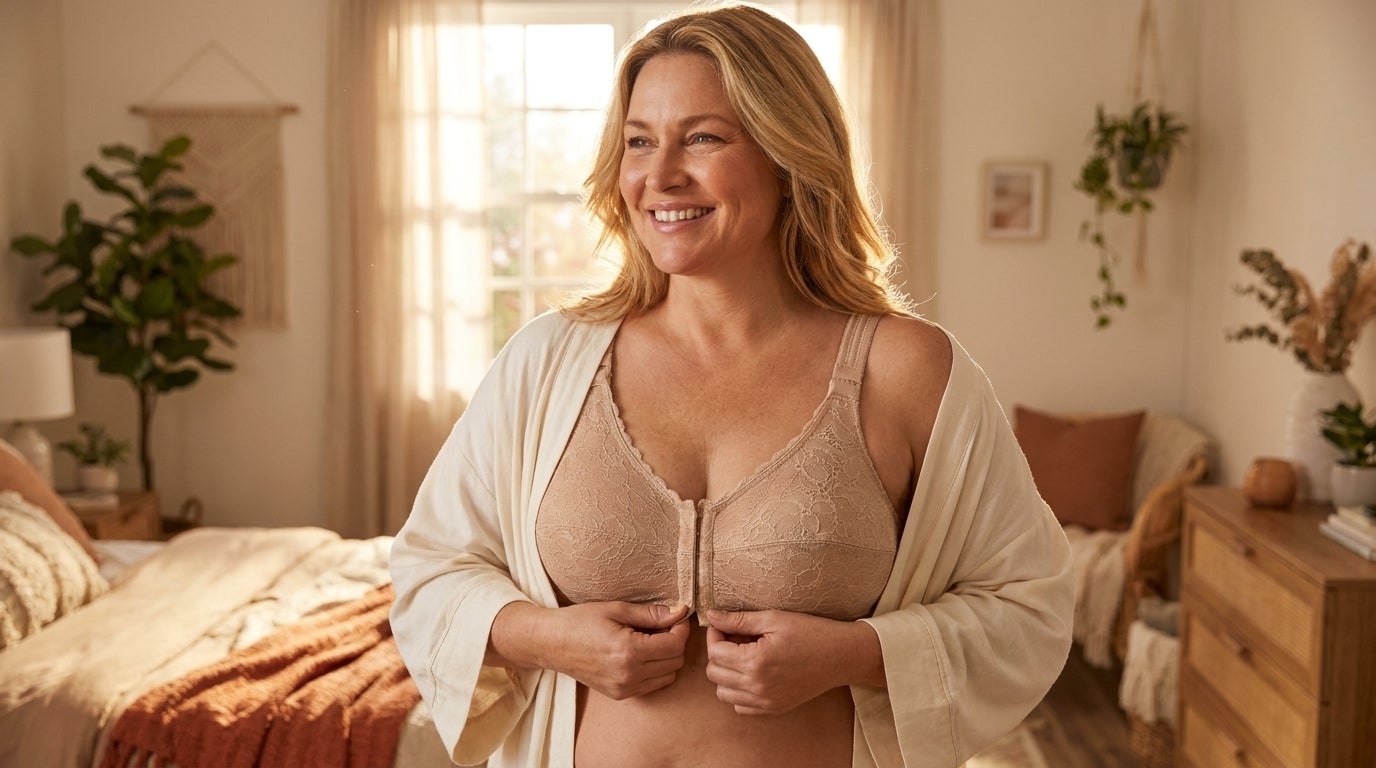
Band problems are felt. Cup problems are seen.
If the band rides up your back, rolls, digs, or slides when you raise your arms, the band is the wrong number. A band that rides up is almost always too big, and one that rolls or digs in is either too small or has lost its stretch. If the cup gapes at the top, wrinkles, spills at the side, or leaves a gap you could fit a hand into, the cup is the wrong letter, and the band may already be right. Change one number at a time, and rule out the mechanics before you touch the size: stretched-out straps, a closure worn down to its last hook, or a bra past its working life will all mimic a bad fit.
Signs the band is wrong
The band does most of the support work, so band problems show up as movement and pressure, not shape.
- It rides up your back over the course of a day, or the moment you raise your arms.
- It rolls, curls, or bunches along the bottom edge, especially if you're short-waisted.
- It digs in at the ribs, or leaves a red line that doesn't fade quickly.
- You're fastening it on the loosest hook already, with no room to tighten as it stretches with wear.
Reviewers describe a band that fits as one that "does not ride up back" and stays put with "no digging" — that's the target.

Signs the cup is wrong
Cup problems are visible in the mirror or under a fitted top, even when the band feels secure.
- Gaping at the top of the cup, or fabric you could tuck a finger under.
- Wrinkling or loose fabric across the cup instead of a smooth line.
- Spillover at the top, side, or underarm, sometimes called "quad-boob" under clothing.
- A cup that looks right in front but strains or gaps under the arm.
One shopper's note sums up the mismatch exactly: "the width was right but cup size was way too big." The band was fine. Only the letter needed to change.
Fix one variable at a time
Resizing the whole bra when only one measurement is off is how a return turns into a second return. Change a single number, hold the other steady, and test again.
- Write down exactly what's wrong today — rides up, gapes, digs, or spills over — before you touch a size.
- If it's a band problem, keep your current cup letter and move one band size in the direction the symptom points: up if it rides up or digs, down if it's already loose and shifting.
- If it's a cup problem, keep your current band number and move one cup letter: up for gaping or a hand-sized gap, down for wrinkling from excess fabric.
- Try Woman Within's Front-Close Wireless Posture Bra, sized in bands 38–54 and cups B–G, or the Wireless Back-Close Cotton Bra in bands 38–54 and cups B–G, in the single size you just changed.
- Browse Woman Within's full bra range in both directions if the first adjustment overcorrects — it's easier to fine-tune from real data than to guess twice.
The mistake that wastes two exchanges
Sizing the whole bra up or down when only the band or only the cup was wrong is the single most common exchange trigger. A shopper who needed "a bigger band size to keep it from being too tight and rolling" doesn't need a bigger cup too — moving both numbers at once usually trades one fit problem for a different one, as in "Cups are huge—to accommodate the sides I think." Change the number that matches the symptom, not the whole bra.
How to check you got it right
Put the new size on, fasten it on the middle hook, and raise both arms straight overhead. The band shouldn't creep up your back. Bend forward at the waist, then stand and check the cups for gapping or spillover. Wear it for an hour under a fitted top — a band that felt fine standing still can still ride up once you've moved, and that's the real test.
Frequently asked questions
What is measured band size?
Measured band size is the actual snug fit around your ribcage, measured directly under the bust with the tape level. It's not always the same number as the size on the label, since sizing systems vary by brand and construction.
How many rows of hooks should a bra have?
More rows of hooks give more room to adjust the band as elastic relaxes with wear. A multi-row, multi-hook back or front closure lets you tighten gradually over the bra's life instead of buying a new size right away.
How tight should a bra band be?
Snug enough to stay level and stay put on the loosest of its hooks when new, with two fingers able to slide under the band without stretching it. If you're already on the tightest hook, the band is too big.
Are the cups true to size?
Cup fit varies by style, since seaming, coverage, and cup shape differ even at the same letter. Check a style's stated cup range on its product page, and use gaping or spillover — not the label alone — to confirm.