








How to build a wardrobe for two sizes
Split your closet into two parts: pieces that flex across sizes, and pieces worth fitting exactly to today.
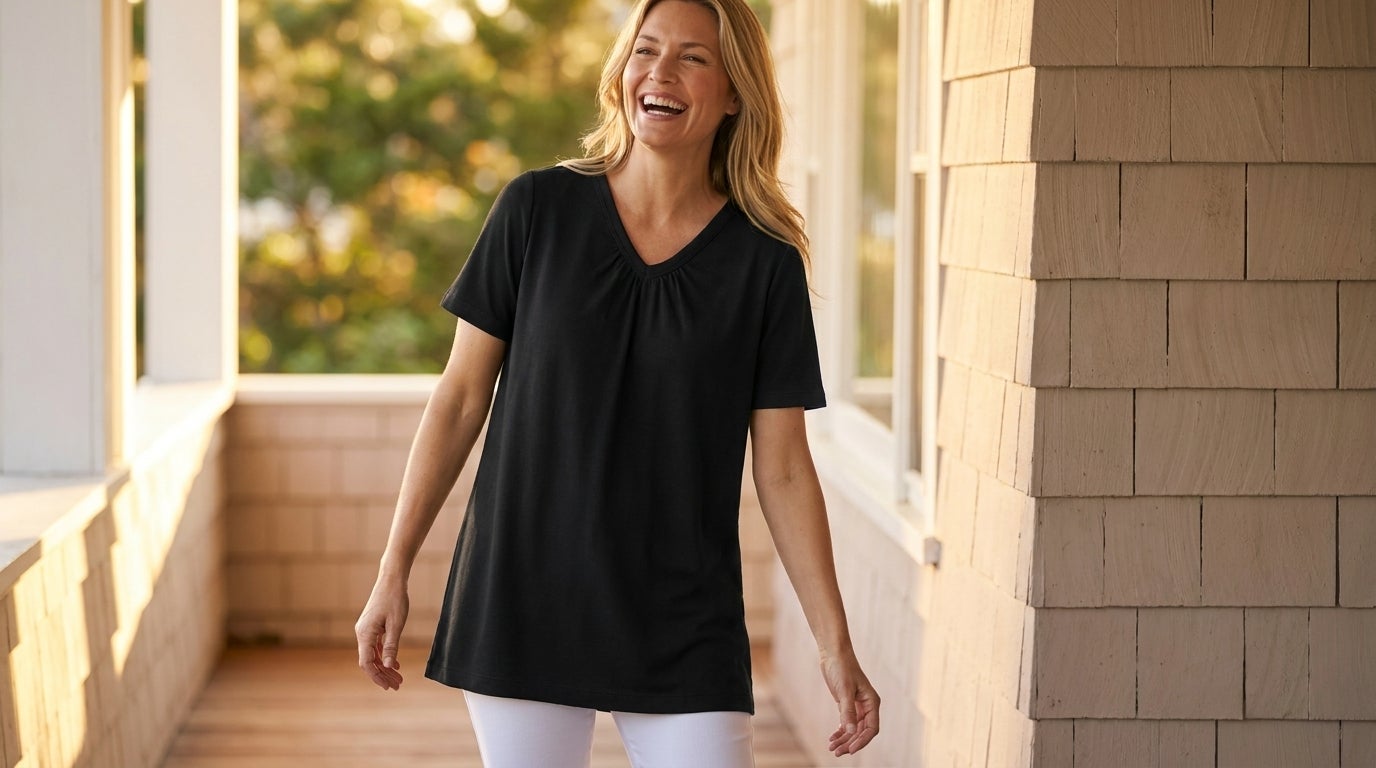
Split your wardrobe into two parts, not one size
You don't need two closets, you need two parts. Sort what you own, and what you buy next, into a forgiving portion which flexes across sizes and, an exact portion that only works when it's fit to today's body measurements. Treat them differently and a good half of the wardrobe stops needing to be replaced.
The forgiving part covers most of what you wear on an ordinary day. The exact part will be smaller, and it covers the handful of pieces where fit, not room, is the whole point.
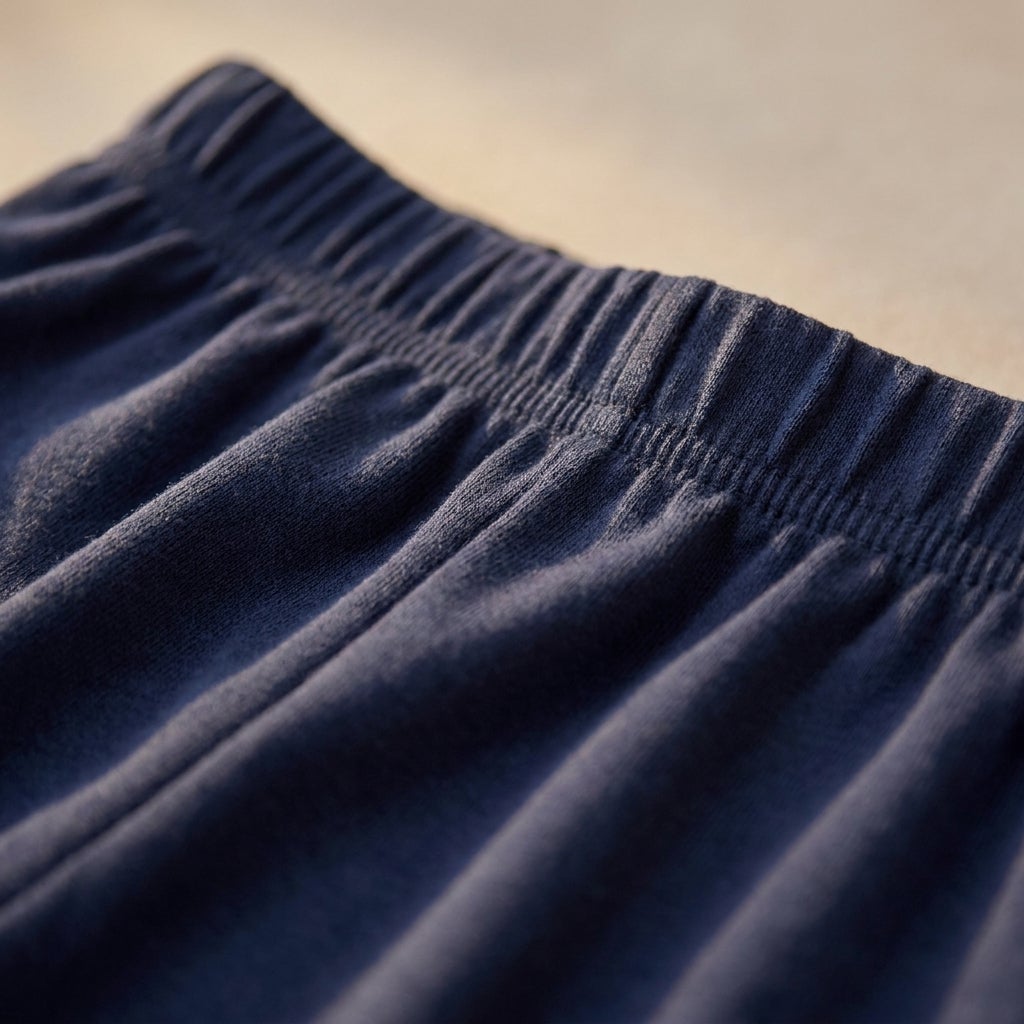
Buy the forgiving part first, in the size that fits your body today
Look for construction and fit details that flex and stretch, not a garment that promises to expand. Buy elastic and smocked waistbands, A-line and empire-waist dresses, shirred and tunic-length tops, wrap and tie waists, and open-front cardigans that never have to close. Buy each piece in whatever size fits you right now, and in the colors you'll actually reach for. Most of these live in the Woman Within Best Sellers collection.
- Pull-on knit bottoms. The 7-Day Straight-Leg Elastic-Waist Stretchy Knit Pant sits on a full covered elastic waistband that stays comfortable without digging or gaping. The Elastic-Waist Pull-On Knit Pocket Capri Pants use a smocked elastic waistband for the same kind of give.
- A-line and empire-waist dresses. The Button-Front Elbow-Sleeve Knit Dress gathers above the fullest part of the body, so the skirt does the adjusting instead of the waistband.
- Tunic-length, shirred tops. The Perfect Short-Sleeve Shirred V-Neck Tunic and its sleeveless counterpart, the Perfect Sleeveless Shirred V-Neck Tunic, skim rather than cling, and the tunic length covers the hip regardless of which size you're wearing.
- Wrap and tie waists. A tie waist can be loosened or cinched on the same day it's worn, which is exactly why reviewers reach for it when they're between sizes.
- Open-front cardigans and shrugs. A cardigan that never closes layers over anything below it, so one purchase keeps working long after a set-waist piece stops.
- Easy pull-on maxi dresses. The Printed Short-Sleeve Crinkle Maxi Dress is cut for room rather than for one waist measurement, so it wears the same way in either size.
Keep the exact list short, and expect to re-buy less frequently
Your exact list is short on purpose: a bra, a structured jacket, and anything more fitted with a defined waistband or shape to it. Fit these garment's to your size today, and plan to replace them when they stop working for your body. A bra that's close but not quite right is uncomfortable in a way that a knit pant never is.
Don't try to future-proof this list. A rigid waistband can't flex, so buying it a size up only means that it doesn't fit you now either!
A ratio you can actually shop by
A workable split is roughly three forgiving pieces for every one exact piece. Most of a working wardrobe should come from the forgiving list; the exact list stays deliberately small.
Keep bottoms in a neutral color palette so your forgiving tops can be printed and more colorful. A single pair of knit pants and a single pair of capris, each in black, navy or another neutral you wear often, let three or four tunics and dresses do the work of variety, and your whole wardrobe will feel full even though it's small.
Consider the category before you decide on a size to order
Sizing direction isn't the same across every category. Reviewers describe knit bottoms and tunics running large, and bra bands running small, so "sizing up, when in doubt" isn't one rule you should apply to your entire closet. Be sure to view each garment's Size Chart and choose the size that most closely aligns with your exact measurements, first. Then, read the reviews for each style before you buy, too. Especially anything going on the exact list, where a size that's close but wrong is the whole problem.
If you're planning to reorder a style that you already own and love, it's wise to recheck the Size Chart and view the current reviews again, rather than assuming last time's size you ordered still applies today.
Frequently asked questions
What do I order if my tops and bottoms are different sizes?
Order each piece by its own size, not a single number for the whole outfit. Check the Size Chart! A shirred tunic or an empire-waist dress will forgive a size difference between top and bottom; if you wear one size in bottoms and another in tops, buy each part to what fits, not to match the other.
Why does the same size fit differently between styles?
Waistband construction changes the fit more than the size label does. A rigid , structured waistband is unforgiving by design, while a smocked or full elastic waistband on the same size can sit comfortably across a wider range of body types. Always check the waistband type, not just the size, before you buy.
How can I check sizing before I buy?
First, view the garment's Size Chart and use your measurements to guide which size you should order. Also read the reviews for that specific style too. Sizing direction differs by category, some run large and some run small, so a general size note won't tell you what you need for this particular piece. Using the brand's Size Chart is best.
Does a stretch knit really work across two sizes?
A knit with real stretch and recovery, paired with an elastic or smocked waistband, offers the most range of anything in a closet. A rigid, non-stretch waistband or a structured woven fabric with no give has the least. That difference is exactly what separates the forgiving list from the exact list.